Disaster Capitalism Hits New York

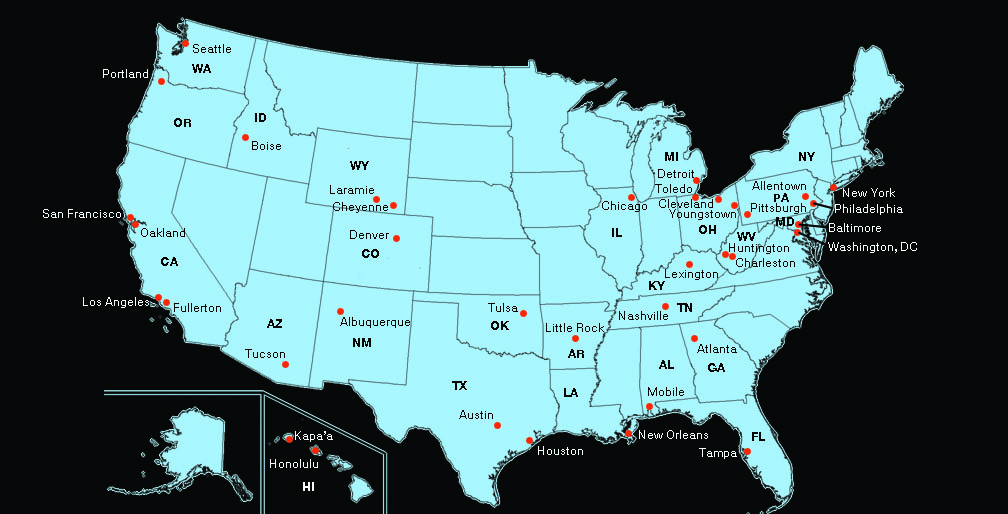
By 2080, New York City could be fortified with a belt of steel--or ringed with wetlands, as in this architect’s vision.

By 2080, New York City could be fortified with a belt of steel–or ringed with wetlands, as in this architect’s vision.

The City Will Adapt to Flooding — but at the Expense of the Poor?

By Arun Gupta     In These Times      January 28, 2013

For more than a decade before Hurricane Sandy, oceanography professor Malcolm Bowman, head of the Storm Surge Research Group at the State University of New York at Stony Brook, warned that a superstorm would someday drown New York City. There were plenty of precedents, he noted, such as the 1992 nor’easter that crippled train lines and Tropical Storm Floyd in 1999, which dumped a foot of rain in 24 hours and caused flash flooding.

“My middle name is Noah,” laughs Bowman, who looks the part of an old salt, with a tanned complexion and trimmed white beard. “The flood’s coming, you better build the ark, get everybody aboard.”

In 2008, Bowman was asked to join Mayor Michael Bloomberg’s New York City Panel on Climate Change, and he recommended that the city build surge barriers like those protecting London and the Netherlands. But his advice wasn’t heeded. According to Bowman, “the panel thought that it was too ambitious, too expensive, too futuristic.”

Now, in the aftermath of the most devastating storm New York has ever seen—one that claimed more than 100 lives in the region, destroyed thousands of homes and businesses, and notched a record storm surge of 13.8 feet in Lower Manhattan—an idea that was once seen as implausible now seems inevitable. One poll found that 80 percent of the public favors fortifying the city with surge barriers. “Money shouldn’t be a problem,” declared the New York Times. Gov. Andrew Cuomo has thrown his weight behind barriers, as have the state’s top Congress members and New York City Council Speaker Christine Quinn, the frontrunner in this year’s mayoral contest.

Bowman and his Storm Surge Research Group have sketched out a plan that could cost an estimated $25 billion and centers on a five-mile-long “Outer Harbor Gateway” between Sandy Hook, New Jersey and the Rockaway peninsula. The barrier would be a belt of landfill, stone and reinforced concrete, possibly topped with a highway that would provide an alternate route from the mid-Atlantic to New England. Thirty-foot-high sand berms would be piled on Sandy Hook and the Rockaways to prevent flood waters from circumventing the gateway. Another gate, this one a mile long, would be built in the upper East River to stop surges coming in from the Long Island Sound to the north.

Proponents say the funding question could be solved by making the highway bypass a toll road. The next step is for Congress to authorize the Army Corps of Engineers to conduct a feasibility study, which experts say could take five years and cost more than $20 million.

Despite the costs, storm barriers seem more a question of when, not if, given that risks of more powerful storms barreling in on higher sea levels will increase exponentially as the Greenland and Antarctic ice sheets melt ever faster. Scientists say coastal cities should plan for sea levels to rise by seven feet by the year 2100. In Brooklyn and Queens alone, says Bowman, “you have to worry about the two to three million people who live less than six feet above high-tide level.” Since it would be virtually impossible for millions of people to abandon New York anytime soon, planners are trying to figure out the best way to hold the next hurricane at bay.

The ultimate gated community

To provide answers, the city tapped Jeroen Aerts, a professor of risk management and climate change at University of Amsterdam, to compile a cost-benefit analysis of flood-risk management strategies. Aerts says that, based on economic assets at risk, New York is the second most vulnerable port city in the world, after Miami. He cites an estimate that by 2080, the metropolitan area from New York to Newark, N.J. will contain about $2.15 trillion in assets that could be damaged by extreme storms. Compared to that—or even the $71 billion post-Sandy repair bill for New York and New Jersey—the $25 billion estimate for storm-surge protection looks like a bargain.

However, Aerts warns, “Don’t put everything on storm-surge barriers.” Because nothing is foolproof, he advocates “a multi-layered safety system.” This includes back-up measures such as updating zoning and building codes, strengthening insurance policies and committing more resources to evacuation if the barriers do fail, as they did in New Orleans during Hurricane Katrina.

Nonetheless, flood barriers will be the front line of coastal defense. Aerts maintains that barriers are not just about safeguarding glittery skyscrapers. “Everyone benefits from storm-surge barriers because the whole city is protected, not only the developers.”

So far in the cost-benefit calculations, however, some people have been given less consideration than others. When asked if New York’s poor, who comprise 41 percent of the city’s population based on living-wage standards (21 percent by federal guidelines), had been considered in the initial discussions, Aerts says, “That’s a new issue. We didn’t discuss it, no.” He adds that the thinking has changed after Sandy as planners realize low-income groups “are the most vulnerable not just because of the structures they live in, but because of their coping capacity.”

This is precisely what worries critics. “Chances are, public policy is going to support only those developments that are high end, and are able to muster the most sophisticated and advanced flood protections,” says Tom Angotti, director of the Hunter College Center for Community Planning and Development. “Everyone else, the one- and two-family homes, are not going to be able to make it, unless they’re mansion owners who have deep pockets.” Indeed, in early December, the city announced that it will “update its building code to require more stringent protection against floods,” such as by requiring all new and rebuilt homes to exceed federal guidelines on elevation, which will raise housing costs significantly.

This change will severely affect low-income people, Angotti says. “Many renters will find that there will be no more rental housing to afford because now it will be too expensive.” But it is public housing residents—79,000 of whom were trapped by Sandy in decrepit towers without electricity—who will be the big losers. Angotti says that because public housing is already on the road to privatization, “Sandy provides an opportunity for the closure of public housing in the Rockaways, Coney Island, possibly Red Hook, which would open up new opportunities for private real estate development.”

It’s all part of the “market mentality,” says Angotti. “Let the market handle it, and the market will exclude low-income people without them even having to say it. It will just be as if it were a natural thing.”

While everyone pays for flood works, individuals are left exposed to market forces, and big real estate developers reap the benefits. The invisible hand never pauses. After Sandy, one developer snatched up a publicly subsidized 1,093-apartment complex on the Rockaways and is counting on raising rents to profit from the investment—which means pushing out low-income tenants. Along the New York and New Jersey coast, speculators are preying on homeowners desperate to unload damaged houses for less than half their pre-storm value. Meanwhile, Arverne by the Sea, a billion-dollar luxury complex on the Rockaways, emerged virtually unscathed because it was designed to withstand hurricane forces.

Scientists say that by the time sea levels rise by one meter—which could take from 50 years to more than a century—barrier islands such as the Rockaways will have to be encircled by levees to survive. So until then, if left unchecked, wealthy homeowners and middle-income renters will continue to flock to these desirable waterfront regions.

Because adaptation focuses on protecting economic assets, and because coastal communities rely on the business, taxes and revenue that come with development, local building restrictions tend to crumble in the wake of storms like a sand castle at high tide. For example, after Hurricane Hugo pummeled South Carolina in 1989, regulations were eased to allow rebuilding on islands near Charleston such that “megastructures perched on fat pilings” have replaced small, modest homes, according to the Wall Street Journal. Despite the obvious dangers and devastation to barrier islands such as Fire Island, where Sandy caused 30 years’ worth of erosion overnight, Cuomo, Bloomberg, Obama and New Jersey Gov. Chris Christie all vowed, “We’re rebuilding.”

Meanwhile, high oceanside rents will push low-income workers to less expensive locales either outside the city or in remote neighborhoods, where they lack support networks and face overcrowding, underfunded services and hours of commuting.

If the free market goes unfettered, that two-pronged dystopian scenario could play out on a broader scale across the U.S. coast. While storm barriers can guard New York City’s flanks, it’s impossible to seal the 3,700 miles of Atlantic and Gulf coastline with seawalls and levees. Unique coastal cultures such as the Cajun in Louisiana, Seminoles in Florida and the Gullah and Geechee of the Southeast will likely vanish if their lands disappear beneath the waves. By the latter part of the 21st century, the wealthy will probably cluster in those seaside cities and resorts that can afford flood barriers and hardened towers. Coasts not armored against rising seas will push inland, and their developed areas may shift to live-at-your-own-risk ramshackle dwellings for middle- and low-income groups seeking seaside relief from deadly heat waves brought on by global warming.

Soft Infrastructure

An alternative proposal for climate-change adaptation, more complementary than competing, inserts the social back into the debate. If barriers and berms are “hard infrastructure,” then “soft infrastructure” is the flip side. Adam Yarinsky, a principal of the New York-based Architecture Research Office and co-author of On the Water: Palisade Bay, which developed the concept of soft infrastructure, says the idea is to “emulate the way nature responds to storm events [by building] in planted natural systems of shallow water as opposed to a vertical seawall that tries to define an absolute line between water and land. It allows for a more fluid, dynamic tidal zone, which has the benefit of dampening wave force from a storm surge.”

Yarinsky and his colleagues acknowledge that soft infrastructure cannot replace surge barriers. Aerts, the risk-management expert, explains, “If you have oyster banks or marshlands it doesn’t matter, the surge is going over it. Wetlands help to reduce the strength of waves, but it doesn’t reduce the height of the waves.”

But soft infrastructure can be an important complement to surge barriers by allowing for controlled flooding that can replace seawalls in some areas, cleaning up blighted ecosystems and serving as a blueprint for viable, mixed-income, mixed-use communities. Proposals reimagining New York’s waterfront, grouped in a recent exhibit titled “Rising Currents” at the Museum of Modern Art, include a working waterfront of sustainable oyster beds, fish farms and algal biofuels; seeding the bay with flood-tempering barrier islands, wetlands and breakwaters; and redesigning flood-prone areas with sunken forests, porous streets and hanging buildings to allow water to enter in a controlled fashion.

Soft infrastructure has the potential to address the failings of public housing, which warehoused the poor away from services, from jobs and from the civic and cultural life of the city. Building a “new aqueous city” of flood-resilient housing on the water, fringing the urban edges with parks and wetlands, and creating a working waterfront would result in desirable housing, recreation and jobs that are denied to many New Yorkers. While this has the potential to turn into boutique urban living, Yarinsky’s co-authors, architects Guy Nordenson and Catherine Seavitt, argue in favor of creating “flexible and democratic zoning formulae for coastal development that … increase community welfare and resilience to natural disasters.”

It’s an exciting vision, but democratizing urban planning is a difficult task at best, and it runs counter to how developers manipulate government to generate private wealth. Angotti points out that the rampant waterfront development of the last decade under Bloomberg has the government’s fingerprints all over it. Rezoning jacked land values “10, 20, 40 times” overnight while the city funneled subsidies, loans and tax breaks to private developers building on those lands.

If it isn’t a problem to find money for surge barriers, as the New York Times asserts, then, given the political will, money can surely be found to develop soft infrastructure that benefits more than developers and million-dollar condo owners. Angotti suggests that instead of burdening the public with the costs, big developers should be made to pay for barriers designed to fortify their “luxury enclaves” and to fund protection for the city’s most vulnerable communities. Taxing the wealthy, high-end developments and corporate skyscrapers would generate money for both hard and soft infrastructure.

But political will does not develop out of thin air. To achieve this vision will require broad-based social mobilization by the people who really make the city run. They must assert their right to remake urban space around communal, democratic, liberatory and cultural experiences, rather than ones based on individualism, consumption, spectacle and accumulation.

One thing is certain: Rather than allow the political conversation to revolve around cold cost-benefit calculations, we must redefine the problem in social and ecological terms to make people’s needs and natural approaches central to the solution.

Of course, neither hard nor soft infrastructure can hold back rising seas forever. Retreat is inevitable. Even the Dutch, who are at the forefront of adapting to rising seas (as 26 percent of their country is below sea level), plan to eventually abandon 20 percent of their land, according to scientists.

In the United States, says Orrin H. Pilkey, professor emeritus of geology at Duke University, “Virtually every port city up and down the East Coast is talking about getting gates.” But some cities are doomed. “Miami, Palm Beach and Fort Lauderdale are sitting on top of very porous limestone” that is as much as 75 feet thick, Pilkey says. A levee is “not going to make the slightest difference. The sea level is going to come up right inside behind it.” A two-meter rise will mean “a thousand-plus miles of shoreline will have to be abandoned,” he adds. Bowman says New Orleans is in a similar boat. Caught between “subsidence”—sinking land—and rising sea levels, “its days are numbered.”

By the year 2300, sea levels could easily be 12 feet higher, and if Greenland and Antarctica’s ice sheets melt entirely, sea levels will rise by 200 feet, entombing virtually all coastal cities under the ocean. In the meantime, says Bowman, “We need to look beyond the next election cycle, the next quarterly bottom line of the corporation. Let’s give it our best shot for, say, 200 years. Then maybe we have to abandon it and the city as you know it dies.”

1 Comment

Filed under Climate Change, Environment, Inequality

Cleveland anarchist bomb plot aided and abetted by the FBI

Rather than target real risks of domestic terror, like neo-Nazis, the FBI entrapment machine demonises anarchists and Muslims
 

FBI mugshot of Connor Stevens, one of five men arrested earlier this year for plotting to blow up a bridge near Cleveland, Ohio. Photograph: FBI/AP

by Arun Gupta, The Guardian, November 28 2012

On 20 November, district court Judge David D Dowd Jr sentenced three anarchists with the Occupy Cleveland movement to prison terms ranging from 8 to 11.5 years for attempting to bomb a highway bridge last spring. US Attorney Steven Dettelbach trumpeted the successful prosecution:

“These defendants were found to have engaged in terrorist activities … These sentences should send a message that when individuals decide to endanger the safety of our community, they will be held to account.”

Dettelbach, however, was trying to spin the judge’s ruling that, in fact, rebuked the government. Dowd handed down far shorter sentences than the prosecutor sought, reportedly saying that the proposed prison terms were “grotesque” and “doesn’t make any sense whatsoever”. The prosecution had asked for sentences of 30, 25 and 19 years, respectively, for Douglas Wright, 27, Brandon Baxter, 20, and Connor Stevens, 20, in the failed plot to use plastic explosives to topple the Route 82 bridge spanning Ohio‘s Cuyahoga Valley National Park on 30 April 2012.

The prosecution was banking on decades-long sentences after negotiating a minimum of nearly 16 years for co-defendant Anthony Hayne, 35, in exchange for his testimony against his four associates.Hayne, who pled guilty 25 July on three charges, was told he would serve half the time of the other defendants. Dowd’s decision sent Hayne’s lawyer scrambling the same day to withdraw the guilty plea, with sentencing now set for 30 November. (The fifth man caught in the plot, Joshua Stafford, 23, is being evaluated for mental competency.)

After Hayne agreed to testify, Wright, Baxter and Stevens accepted guilty pleas 5 September, gambling that Dowd would reduce their sentences based on mitigating factors. But this nixed the defense plan to argue entrapment, detailing how Shaquille Azir, a paid FBI informant with a 20-year criminal record, facilitated every step in the plot.

Azir molded the five’s childish bravado and drunken fantasies into terrorism. He played father figure to the lost men, providing them with jobs, housing, beer and drugs. Every time the scheme threatened tocollapse into gutterpunk chaos, he kept it on track.

FBI tapes reveal Azir led the brainstorming of targets, showed them bridges to case out, pushed them to buy C-4 military-grade explosives, provided the contact for weapons, gave them money for the explosives and demanded they develop a plan because “we on the hook” for the weapons. At one point, Azir burst out in frustration at their ineptitude: “every time we meet, we leave saying, we’re doing some research. And then get back together and go back to square one.”

This case could have put on trial the post-September 11 strategy of“preventative prosecution”, in which the FBI dispatches provocateurs to infiltrate targeted religious and political groups to see what they can stir up. The targeting is not based on who are the main domestic terrorist threats, such as neo-Nazis preparing to start a race war, and violent anti-abortion fanatics. The threat assessment singles out the already-demonized, such as Muslims. Jeanne Theoharis, professor of political science at Brooklyn College and co-founder of Educators for Civil Liberties, says:

“There’s a tremendous amount of violent Christian religious speech in our airwaves and that’s considered protected. It sounds very different to the government if the speaker is a Muslim.”

Similarly, anarchists are inherently suspect. A recent FBI document calls anarchists “criminals seeking an ideology to justify their activities”, warning they were engaged in “experimentation with new tactics, weapons … leading up to 2012 conventions”. This tone pervades the government case against Wright, Baxter and Stevens. It claims the “brothers-in-arms” were united in “hatred of the government, and shared anarchist background” and had already decided “to carry out an attack that would, in their minds, lead to a larger civil war”.

Pardiss Kebriaei, a senior attorney specializing in national security at the Center for Constitutional Rights, claims standard operating procedure in terror cases “starts with surveillance and profiling on the basis of religion, politics and national origin”. She notes parallels between the Cleveland anarchists and the “Newburgh Four”, named for the upstate New York town in which the plot was hatched. The Guardian reported they were convicted in 2010 “of an Islamic terrorist plot to blow up Jewish synagogues and shoot down military jets with missiles”, and described them as “beset by drug, criminal and mental health issues”. Kebriaei says the four men “are from the poorest community in New York, and the government was exploiting their needs”.

The Cleveland anarchists are cut from the same cloth. Lea Tolls, 47, a self-described “Occu-mom”, says, “Except for [Stevens] they were destitute. They are angry, some have mental illnesses, and there is alcoholism and abuse in their families.” The FBI dispatched Azir to an Occupy Cleveland event on 21 October 2011, “based on an initial report of potential criminal activity and threats involving anarchists”. Terry Gilbert, Stevens’ defense attorney, questions why the feds would send “a plant into a peaceful demonstration with a very ambiguous claim of criminal behavior. Once you get an informant in there, they have every motive to get a case. They are trying to make money or are working off a criminal case.”

This profile fits Azir to a T: he has filed nine bankruptcy petitions in 12 years and was indicted twice during the investigation for passing bad checks. It also fits the FBI plant in the Newburgh case, Shahed Hussain, a convicted fraudster who became an FBI asset in return for Etch-a-Sketching away his legal problems and for $100,000 in expenses and wages.

In a memo dated 14 November, Judge Dowd undercut the rationale for the investigation. The FBI’s first report from Azir stated that Doug Wright and a group of white males at the Occupy Cleveland event “were expressing displeasure at the crowd’s unwillingness to act violently”. In actuality, Dowd found that Baxter and Wright “joined the others in the nonviolent approach”.

Dowd also rejected the Bureau’s description of Wright as being in the“planning phase” to topple a bank sign from a 947-foot-tall skyscraper in downtown Cleveland, finding that he was merely expressing his “fascination with the idea of pulling pranks by using spray paint, stink bombs and smoke bombs which he heard about in the Anarchist’s Cookbook”. Dowd noted as well that Azir “facilitated the criminal conduct of the defendants”.

The Newburgh defense counsel, like the Cleveland attorneys, determined that entrapment offered the best chance of acquitting their clients. If they succeed, it will be the first time since 9/11 that entrapment has beaten a terror rap. Kebriaei says:

“Legally, entrapment is a very narrow and very difficult defense. It is very difficult for anyone to succeed in front of a jury if you’re accused of terrorism in this country.”

Entrapment turns on the question: were the accused predisposed toward violence? That’s why the government wants to equate Islam with terror and anarchism with anti-state violence: once the ideas are planted in the public’s mind, it can wave the red flags and prejudice the whole case. Theoharis says:

“Judges are not willing to challenge the government because if you take a bold stand that can mean you’re not going to move up.”

District court Judge Colleen McMahon blasted the government’s conduct in the Newburgh Four, saying:

“Only the government could have made a terrorist out of Mr Cromitie, a man whose buffoonery is positively Shakespearean in its scope.”

But, says Theoharis, the judge “wasn’t actually willing to do anything courageous”. Dowd didn’t go out on a limb either, applying terrorism enhancement charges in a pre-sentence hearing, though Gilbert says he interprets this as a tactical move. “Dowd wanted to craft a reasonable sentence that gave the government less opportunity to challenge it on appeal.”

The result, however is that the FBI continues to run rampant. To stop entrapment, says Kebriaei:

“The first step is more scrutiny of the process and how these convictions are coming about. Exposing these cases may effect prosecutorial and police practices in terms of targeting people.”

The Newburgh and Cleveland cases may eventually turn out to be a nail in the coffin of the FBI’s entrapment strategy. But it comes at the cost of nine men losing decades of their lives and nine devastated families. There are hundreds more cases like these ones, and no one knows how many still to come.

• For information on how to contact Brandon Baxter, Joshua Stafford, Connor Stevens and Douglas Wright, see cleveland4solidarity.org. For the Newburgh Four, see projectsalam.org

2 Comments

Filed under Occupy Movement

Don’t Let Obama Cut Medicare, Medicaid and Social Security

The Progressive
November 15, 2012
by Arun Gupta

If you voted this election, whether for Barack Obama, Jill Stein or even Mitt Romney, you did not vote for austerity. But that’s of little consequence to Obama and the Republicans. The two parties are currently drafting measures that will undermine Social Security, Medicaid and Medicare as the economy approaches the “fiscal cliff” at the end of this year when more than $600 billion in tax increases and spending cuts will kick in absent a new budget deal.

They hope to strike a “grand bargain,” but are bickering over how much to increase taxes and cut spending. The spotlight has been on the Bush tax cuts, which Obama campaigned on repealing for the rich, but this issue is a sleight of hand that distracts the public from the bipartisan plotting against your retirement income and healthcare.

Surely, you say, Obama will thwart the Republicans’ scheme to dismantle social welfare. After all, it’s well known that retirement programs are healthy. Social Security is solvent through 2033 and Medicare is solvent through 2024. Both can be strengthened for decades to come with relative tweaking.

Trusting a Democratic president with protecting the general welfare is ill-advised when the last one gave us NAFTA, welfare “reform” and the repeal of Glass-Steagall. Not only has Obama been gunning for retirement programs since 2008 (I’ll explain), he’s so hell-bent on reducing deficits that he’s willing to damage the economy. The Congressional Budget Office estimates if the economy plunges over the cliff, recession will hit in 2013. Interestingly, the CBO calculates that if all the tax cuts are left in place and no spending cuts are enacted the economy will grow by 4.4 percent next year and add 2.3 million full-time equivalent jobs. This would be the highest rate of growth since the late 1990s.

Now, it’s a stone-cold fact that the Democrats are willing to gut social welfare. Listen to New York Times chief political correspondent Matt Bai: “Mr. Obama, during his ‘grand bargain’ negotiations with the House speaker, John A. Boehner, in the summer of 2011, had already signed off on painful cuts to Medicare, Medicaid and Social Security.” Bai says there was “near unanimity” among Obama’s advisers and Harry Reid and Nancy Pelosi said “they would get behind it.” Paul Krugman’s assessment is harsher, saying Obama was “willing to sign on to … draconian cuts in key social programs.”

During the summer of 2011 the Obama White House and the Republican House played chicken over raising the federal debt ceiling. Bai says the two sides were haggling over the amount of cuts, not the question of bleeding retirement programs. Obama was willing to sacrifice $1 trillion in Medicare cuts over two decades, $110 billion in short-term Medicaid cuts, and acquiesced to “changing the Social Security formula so that benefits would grow at a slower rate.”

Mind you, the Budget Control Act Obama and Boehner eventually inked not only put the fiscal cliff in place, it cut spending for a second time in 2011. Over the next decade this will chop $900 billion in non-defense discretionary spending.” This is wonk-speak for social programs, which will shrink to pre-1962 levels by 2021. Simply put, Washington already plans to roll back the Great Society – even before the fiscal cliff is reached.

But wasn’t Obama at the mercy of a Tea Party Congress threatening default unless he forked over $2 trillion in spending cuts? That’s what Bai argued last April: “Not only was [Obama] bent on avoiding a catastrophic debt default, but he needed to get out from under the debt issue, to demonstrate that he cared about reducing deficits before public concerns about government spending, stoked by rhetoric on the right, overwhelmed his presidency.”

There are more things wrong about this than a penguin in the desert. Allowing Republicans to use economic blackmail only emboldens them. The fiscal cliff is the third time the right is using mafia tactics – “Nice country you got here. Shame if something were to happen to it” – as Krugman describes it. The only way to call the right’s bluff is to allow the economy to go wobbly so Wall Street, the GOP’s masters, will bring their attack dogs to heel.

Also, notice that Bai thinks allowing a default is unthinkable, but pilfering food, medicine and money from more than 100 million Americans is perfectly fine. As for Bai’s contention that “public concerns about government spending” stoked by the right would overwhelm Obama’s presidency, it’s utter bullshit.

Take a look at this site, which covers 25 polls on public priorities going back to June 2010. When pollsters list options, which skew responses, the economy and jobs poll close to 50 percent as the top priority, trouncing the deficit, which averages in the low twenties. The latter figure, incidentally, is similar to the percentage of voters in the 2010 mid-term elections who said they supported the Tea Party. In six polls, the response was open-ended, which better reflects what the public thinks. Economy and jobs still notched 49 percent on average. The deficit and national debt was barely a blip, averaging 4 percent.

No matter how the data is sliced then, the deficit is an inside-the-Beltway obsession that at most inflames right-wing firebrands who are never going to support the Democrats.

Nate Silver crunched the numbers on the debt deal in July 2011 – if there’s only one lesson from this election, it’s that Silver’s number-crunching is unparalleled – and found House Republicans to be “extremely conservative on fiscal matters and … significantly out of step with the public as a whole.” As for the mix of spending cuts and tax increases Obama put on the table, it was “quite close to, or perhaps even a little to the right of, what the average Republican voter wants, let alone the average American.”

So why didn’t Obama tune out the chattering classes and stare down the Tea Party? It would have strengthened his standing with the public going into the 2012 election. From this evidence, it’s impossible to claim Obama is hostage to the right. The truth that remains, even if it seems improbable, is that Obama is a right-wing politician who has had the welfare state in his sights from day one.

Don’t take my word for it. Obama said it on January 15, 2009, in a “wide-ranging” interview with the Washington Post five days before his inauguration. The article was headlined: “Obama Pledges Entitlement Reform; President-Elect Says He’ll Reshape Social Security, Medicare Programs.” Obama said this was part of his legacy, declaring that he was “willing to spend some political capital” so that the “the hard decisions are made under my watch, not someone else’s.”

This was not idle chatter. Here is a sampling of what Obama said and did the next two years.

In February 2009 Obama held a “Fiscal Responsibility Summit” at the White House, in which he issued dire warnings of future generations being “saddled with our debts.”

In his 2010 State of the Union Address he proclaimed, “Like any cash-strapped family, we will work within a budget to invest in what we need and sacrifice what we don’t,” and called for a three-year spending freeze that fell heavily on social programs.

On February 18, 2010, Obama signed an executive order creating the “Simpson-Bowles Commission” tasked with making “recommendations that put the budget in primary balance.” In November 2010, right before the midterm elections, it proposed reducing corporate tax rates by 20 percent and on the wealthy by 30 percent while raising rates on middle incomes and the retirement age to 69. Remember, this was in the name of cutting the deficit.

This is before the Tea Party swept into Congress, so there was no pressure on Obama to appease the right. By adopting Tea Party talking points on spending and comparing government to a family – what family do you know that has 8,100 tons of gold reserves, a space program and embassies in some 200 countries? – Obama legitimized debt as a major concern going into the 2010 election.

A little more history. Obama ran in 2008 on repealing the Bush tax cuts. But he reneged on his promise just one month into his presidency even though he was gushing with political capital, the right was in disarray and the Democratic-controlled Congress was ready to pass it. (After campaigning in 2012 on abolishing tax cuts for households earning more than $250,000, Obama indicated he was willing to renege once more days after being re-elected.)

For his first term Obama followed the script penned by Larry Summers, his chief economic adviser in 2008 and the Clinton-era architect of the financial bubble that exploded four years ago. Writing on September 28, 2008 in the Financial Times, Summers outlined the Rosetta Stone for Obama’s presidency.

Summers’ article was published right after Lehman Brothers’ collapse, the financial Pearl Harbor that threatened the global economy. It was a classic case of The Shock Doctrine: using the meltdown to go after social welfare. He argued for a stimulus, while taking pains to mention, “We still must address issues of entitlements and fiscal sustainability.” He also said no “new entitlement programs or exploding tax measures,” which included “healthcare restructuring,” but not single-payer healthcare. Summers’ silences were notable: nothing about regulating finance, strengthening labor organizing or addressing the home foreclosure crisis.

Fiscal sustainability is simply a euphemism for cutting social spending to pay for deficit reduction. Economists like Dean Baker and Paul Krugman have demolished every rationale for deficit reduction under present circumstances: with interest rates below the rate of inflation, bondholders are paying the U.S. government to hold their money; reducing the deficit would strangle growth; the best way to reduce the deficit is through growth and inflation; and the plan to hack away $4 trillion in a decade will not reduce the national debt meaningfully.

Even if the deficit does need to be reduced, then the reasonable course is to have the Pentagon and wealthy pay for the two unfunded wars, Bush tax cuts and Wall Street crash that blew up the national debt. Which is why Obama’s song and dance about “shared sacrifice” is so grating – and probably music to granny-starver Paul Ryan’s ears. Obama and Boehner are wrangling over whether or not the Gulfstream set has to part ways with a 4.6 percent nudge in income tax, but they agree that grandma must skimp on food, heat and her meds. “Hey, we’re all in this together.”

Whatever your politics, you’ve probably been savoring the humiliation of “the biggest loser” Karl Rove, cackling over Bill O’Reilly’s lament that “the white establishment is now the minority” and sharing “White People Mourning Romney.” 

Well it’s time to wipe the gloating off our faces and get to work stopping Obama from stealing our healthcare and retirement income, otherwise it will be Wall Street’s turn to gloat. Yet again.

2 Comments

Filed under Austerity, Economy, Politics

What Happened to the Green New Deal?

Truth-out.org

by Arun Gupta

Out of the ashes of Obama’s green-collar vision, a worker-run business may point the way to the economy of the future.

Last election, Obama had an economic plan and wasn’t afraid to embrace government as a primary creator of jobs. With markets melting down, almost half a million people being fired a month, and automakers and banks emitting a death rattle, Obama presented a sweeping vision of tackling health care, global warming, a rogue Wall Street and reshaping the decaying industrial economy with a green-collar one. Liberals dubbed it a Green New Deal and fantasized about the land blossoming with solar panels, electric cars and high-speed trains as new regulations cut corporations down to size.

Obama botched the plan, however. He inflated hopes in 2008 that his policies would create 5 million green-collar jobs in a decade. He then skimped by allocating only $90 billion in stimulus money for clean energy, producing a measly 225,000 jobs after 18 months by the White House’s own estimates.

Republicans blasted Obama’s green economy as failed central planning imported from Europe. They believe the government that’s best is the one that governs the least. Its purpose is to spur the private sector, but how it does so is mysterious. This was Romney’s position, but it seems to have become Obama’s, as well. During the election campaign, the two mouthed the same invisible-hand mumbo-jumbo, offering little chance of reviving an ailing economy.

In the real world, corporations clasp onto the public teat like squealing piglets. Big business would starve if deprived of state-organized central banking, transport, electricity, water, sewage, courts, zoning, police, environmental remediation, customs and labor regulation. Pick an industry and you’ll find tailored public aid. Banks and car makers get bailouts; energy and forestry companies mine, drill and log public lands; the health care industry thrives thanks to the Food and Drug Administration (FDA), National Institutes of Health (NIH), Medicare and Medicaid; agribusiness soaks up crop insurance and subsidies; home construction is built on Fannie Mae, Freddie Mac and the Federal Reserve; and perhaps the largest part of the economy – the military-surveillance-police-and-prison sector – is assembled piece by piece by government.

Clearly, government policies create many millions of jobs. (That’s not counting 22 million government employees and an estimated 14 million other jobs created by government contracting and consumer spending by public-sector workers.) This is known as industrial policy. Every country does it, and the United States is no exception. We just tend to do it worse because it is heresy to question the god of the free market. If the public realized how much big business depended on public support, then there might be a loud clamor for more activist government.

The lesson is not that the Obama administration did too much to spur a green economy; it did too little. Answers to why the green-collar economy withered and where its future may lie can be found in the story of Serious Energy and workers from the former Republic Windows and Doors factory in Chicago.

A New Era

Obama’s green jobs plan had one missing element – labor. A healthy economy requires plenty of good-paying, stable jobs with benefits. However, the titans of Wall Street aren’t going to voluntarily give up profits so the proles can get better wages and social programs; the proles have to fight for it.

As if on cue, a glimmer of labor’s revival emerged after Obama’s election. On December 5, 2008, 240 workers at Republic Windows and Doors staged a sit-down strike after receiving notice that their factory would be mothballed. The workers, members of Local 1110 of the United Electrical, Radio and Machine Workers of America, raised expectations that a wave of labor militancy could turn the tide against runaway corporate power.

Soon, all the elements came together. Serious Materials, a clean-technology firm, purchased the bankrupt Republic plant, which specialized in manufacturing high-energy-efficiency windows. Serious Materials (since renamed Serious Energy) billed itself as a green-economy pioneer ready to revolutionize manufacturing with green products. Obama’s stimulus would open up the market for its goods. And Serious was intent on showing profits, sustainability and social responsibility were compatible by keeping the unionized workforce in place.

Serious was one of many companies that hitched its wagon to Obama’s plans to green old markets and catalyze new ones. Despite shifting business models, Serious flailed along with the green economy. Now, Serious is no Solyndra, the solar-panel manufacturer that defaulted on a $535 million taxpayer-backed loan. The Republicans successfully saddled Obama with Solyndra’s bankruptcy, turning it into “a case study of what can go wrong when a rigid government bureaucracy tries to play venture capitalist and jump-start a nascent, fast-changing market,” as he Washington Post called it. Serious shows the private sector can be just as wrong. Ten venture capital firms poured more than $140 million into Serious and have little to show for it.

But rising out of the ashes are the Republic workers. They’ve raised hundreds of thousands of dollars to purchase machine tools and lease factory space to open the New Era Windows Cooperative. Modeling themselves on cooperatives in Argentina’s recovered factory movement and Spain’s Mondragon, the New Era workers will collectively decide how to manage the business, what products to manufacture and what to do with the profits. While they make green windows, they hope to inspire other self-managed enterprises across the United States and could provide an alternative to free-market capitalism.

Ironically, if New Era succeeds, it will do so with zero government support. One might have expected both presidential candidates to heap praise on the cooperative. Romney could have touted the workers’ entrepreneurial initiative, while Obama could have pointed to it as a new model for domestic green manufacturing.

In terms of Serious and Solyndra, their breakdowns are par for the course. The clean-tech sector is littered with so many casualties it looks like a Civil War battlefield. It is an unavoidable part of the process, and the Obama administration made a big mistake in shrinking away from failures.

Josh Whitford, a professor of sociology at Columbia University who studies industrial policy, says, “Novel technologies are areas in which the rewards are very uncertain and where a lot of things will not pan out. Venture capitalists deal with this by funding lots and lots of companies in the hopes of hitting a winner. They expect a lot of their investments to fail. In fact, if none failed, they’d think they were too far from the ‘possibilities frontier.'”

Government’s goal, says Whitford, “is not to hit a big financial winner, but to promote policies judged to be socially beneficial. He explains, “In the case of industrial policy, the purpose is often to push a technological direction,” such as cutting-edge clean energy that benefits society by curbing greenhouse gasses. Government is up against the same constraints as venture capitalists, however. Whitford says it does not know which projects will succeed. “So, government should, like venture capitalists, be spreading resources around and betting on multiple horses in the hopes that some do win. If the government has no failures, it’s being too conservative.”

Windows of Opportunity

The story of Serious and the Republic workers begins in 2007. Serious Material was planning to market EcoRock, which it touted as requiring only 10 percent of the energy used to make standard drywall. It raised $50 million to build factories in the United States that could crank out 400 million square feet of EcoRock a year. It’s the type of project that excites wonks: Serious Materials would reinvent the archaic drywall industry, which spews out more than 20 billion pounds of carbon dioxide annually, with a stateside 100-kilowatt solar-power plant that would create hundreds of good-paying manufacturing jobs while eliminating nearly all greenhouse gas emissions.

To make the product viable, Serious was counting on Obama enacting a cap-and-refund carbon tax. As small-batch production of EcoRock costs nearly twice as much as regular gypsum drywall, it needed a carbon tax to entice contractors to use it. But the carbon-tax bill died in Congress, so EcoRock was doomed to the green-building niche. This added to Serious’ woes because it jumped into the building market just as the economy collapsed in 2008. Furthermore, EcoRock may be great for the environment, but not for the bottom line. As one report noted, it “does not insulate or curb power consumption in buildings.” In 2010, CEO Kevin Surace explained to Greentech media that Serious “never pulled the trigger” on constructing a full-scale factory because “Gypsum (drywall) plants are 75 vacant.”

“New construction is down 80 percent from the peak,” said Surace.

Flush with cash to build factories, Serious Materials pivoted to plan B: manufacture windows that slash heating and cooling by 40 percent. Even though home building was in the dumps, Serious calculated that it would “ramp up production [in 2009] by tenfold” because of anticipated demand. It had been in the windows business for a few years, and in 2008, it purchased Alpen Windows in Colorado. In 2009, it added the defunct Kensington Windows factory in Pennsylvania, where 150 workers had been booted out of work the previous year.

The real prize was the Republic factory. The workers there won $1.75 million in wages and benefits after a six-day-long sit-down strike. They were unemployed, however, joining more than 600,000 workers who lost their jobs in December 2008. With 4,000 news articles published on their fight, Serious was paying attention. At Serious’ headquarters in Sunnyvale, California, CEO Suracewatched the drama unfold and pondered riding to the rescue of the beleaguered facility.

An engineer and entrepreneur, Surace first considered the downside. He told Inc. magazine: “The workers were up in arms. The equipment had been pillaged. The computers were destroyed. The customers didn’t want to buy. The records weren’t accurate. There was no management team. No one but the craziest person on earth would take over that.”

At Serious Materials’ holiday party that December, co-founder Marc Porat pushed Surace to consider the upside: “Think what can happen! We’re creating green-collar jobs. We’re creating an energy-efficient product. We’re hitting climate change. And it’s Chicago!”

“It will come to the White House’s attention,” said Porat. “It’s a perfect expression of their policy.” According to a detailed account in Inc., which named Surace “Entrepreneur of the Year” for 2009, the board of Serious Materials approved the acquisition of the idle factory based on “owning one of the largest window-glass facilities in the country, with a seasoned work force and a fabulous location.”

Not lost on anyone was the “public relations potential” of aligning with the Obama administration’s plan for a green-collar economy. The stimulus included $5 billion for the Weatherization Assistance Program. Much of this was for tax credits for energy-efficient retrofits that included windows. Serious was eager to cash in because its windows exceeded Energy Star ratings by up to 400 percent.

Surace became a rock star in the clean tech field, hit the TED circuit and shared stages with politicians. He gave Sen. Mark Udall (D-Colorado) a tour of Serious Energy’s Boulder facility, wielded scissors with Pennsylvania Gov. Ed Rendell for a “green ribbon-cutting ceremony” at the Kensington plant, and basked in the limelight with Joe Biden as the vice president heaped praise on the re-opened Chicago factory. Surace was on a mission to save the world from climate change with green windows and drywall that would generate serious greenbacks for Serious Materials’ investors.

Despite the grim economy, Serious hauled in $60 million from investors in 2009, one of the largest venture capital deals of the year, and its backers were salivating. In a newsletter from 2009, the Chicago-based Mesirow Financial, which pumped $15 million into Serious that year, wrote glowingly of how its “private equity investors” would benefit because $10.5 billion of stimulus money was in the pipeline “for home weatherization and federal building efficiency retrofits.”

Everything was going according to plan. As Serious collected factories, it boasted of “creating green collar jobs in plants across the country including … the President’s home town of Chicago,” wrote an Inc. editor. Inc. noted: “The Republic rescue has paid off handsomely in publicity … Aspiring vendors, curious dealers, and assorted well-wishers began stopping by the plant after its reopening. These days, salespeople rarely need to introduce Serious Materials to their prospects; the White House has already done that for them.” Revenue in 2009 reportedly increased by 50 percent; the company was employing more than 300 people, and in March 2010, Serious landed a coveted contract to upgrade the Empire State Building’s 6,514 windows.

Best-Laid Plans

Cracks were appearing in the façade, however. By the end of 2009, only 20 workers had been hired back at the old Republic plant, and Serious was spending $100,000 a week to keep the space open, which could hold 600 workers. Surace admitted the company had erred in thinking “we’d be hot and heavy into weatherization of thousands of homes in the Chicago area.”

Serious put its chips on weatherization, but the recession weakened its hand. The Department of Energy inspector general found that by December 2009, only 8 percent of the money had been spent “and few homes had actually been weatherized.” Because the $4.73 billion in the pipeline was divided into 58 spigots to cover every US state and territory, “State hiring freezes, problems with resolving significant local budget shortfalls, and state-wide planned furloughs delayed various aspects of the program.” On top of that, little money was being spent on windows like those built by Serious because weatherization also covered furnaces, insulation, water heaters, weather stripping, cooling systems and storm doors.

By the summer of 2010, Serious was back on the PowerPoint circuit, imploring funders for $56 million to become a player in the building management market. Its new model – the third in three years – was software “for monitoring and lowering energy consumption in commercial buildings.” Serious was acquiring more companies – software firms like Valence Energy and Agilewaves. It boasted of 60 customers in the wings and products that could deliver “immediate energy savings of 10 to 15 percent with payback in one to two years.”

But Serious was trying to muscle in on the turf of heavyweights like Siemens, Honeywell and General Electric, so it was back to the drawing board. After changing its name, Serious Energy unveiled a new division and plan number four in November 2011. A spokesperson announced Serious Capital would finance energy efficiency retrofits of buildings for free: “We install, at no cost to customers, energy conservation measures that will save energy,” they said, “and we become the agent for utility bill payments.” Serious Energy figured the revenue stream would allow it to pay the bills and lenders and leave enough for a tidy profit. For the third time, it was eyeing a government angle, committing to perform $100 million in retrofits as part of Obama’s Better Buildings Initiative.

The initiative is one of those so-called “public-private partnerships” that are economic quackery. The Better Building Initiative promises to cure every ill – “creating jobs, growing our industries, improving businesses’ bottom lines, reducing our energy bills and consumption, and preserving our planet for future generations” – with no pain in the form of taxpayer financing or altering business as usual. For Serious, the initiative made little difference. As Greentech Media pointed out, it was unclear how it was going to “get the backing to meet its stated goal of $2 billion in potential project financing.” Plus it would need to buy insurance as a hedge in case the savings did not materialize.

Once exalted as the poster child for exemplifying Obama’s vision of “green-collar jobs at the hands of a resurgence in American innovation,” Serious Energy shriveled into a new economy shell reminiscent of Enron, chucking aside manufacturing for software, finance and hedging. The venture capital taps were also running dry. Serious raised less than $20 million of its 2010 goal of $56 million, and less than $3 million of a $33 million round in 2011.

The free retrofit plan unraveled in weeks. In February 2012, Surace was canned, and Serious announced it was closing the Chicago factory. On February 23, it summoned the 38 remaining workers to “the offices of the notorious union-busting law firm Seyfarth and Shaw,” as Labor Notes put it. The workers were told they would get their 60 days pay under the law, but the factory would be cannibalized and the machines shipped to Serious’ plants in Pennsylvania and Colorado. Not given to taking things lying down, the workers sat down once more. Less than 12 hours later, they emerged victorious with a written agreement that the factory would operate for 90 days longer while Serious Energy looked for a buyer. As for Serious Energy, Porat says it is returning to its roots of producing soundproof drywall, a business he admits has very little to do with clean tech.

Working World

UE Local 1110 had no illusions that a white knight was in the wings, however. During a visit last May to the headquarters in Chicago, local President Armando Robles confided: “Nobody is going to buy the factory after two occupations. They don’t want troublemakers there.” Having shown themselves to be innovative risk-takers by winning two sit-down strikes that were technically illegal, the workers decided they would run the factory themselves. They joined forces with The Working World, which provides “investment capital and technical support for worker cooperatives,” and raised the money to buy the window-making equipment and establish the worker-run and -owned business.

The cooperative is still in the works. The big question is, can it blaze a path for labor to revive manufacturing? Small, worker-run cooperatives can’t replace an advanced industrial base, but they could democratize the US economy and employ millions in stable, living-wage jobs.

Networks of cooperatives could also provide a model to supplant the warmed-over Keynesianism beloved by liberals. Stimulating demand or creating public-works programs would still be effective today; Obama has done far too little of it. Trying to reshape the industrial base as happened under FDR (and that’s mainly because of World War II) is far more difficult because back then, US capital had limited options beyond the domestic market for consumers, factories and workers. That’s not the case in the globalized economy. The biggest US employer, Walmart, pays poverty-level wages to most of its 1.4 million workers. The most valuable corporation in the world, Apple, has only 13,000 US-based employees outside of its retail stores. And both source most of their goods from China.

The free-market solution is to subsidize corporations, a point upon which Romney and Obama agreed. For instance, states like Alabama, Tennessee and Mississippi already gift $300 million or more to automakers opening plants they were planning to build. Imagine if instead of padding the profits of Fortune 500 companies, the public sector funded tens of thousands of worker-run cooperatives. Many would go bankrupt, but that’s the price of innovation. The upside would be successful worker-run cooperatives rooted in communities. Such enterprises would be unable to move operations to Mexico or Malaysia, while abuse of employees that is far too common here would be almost impossible in democratic workplaces.

A new economy demands new answers, not the failed free market or nostalgia for a past that no longer exists. The New Era Windows Cooperative might just provide some of those answers.

Copyright, Truthout. May not be reprinted without permission.

14 Comments

Filed under Economy, Environment, Labor, Politics

Meet the New Obama, More Dangerous Than the Old Obama


The G C Advocate
November 17, 2012
By Arun Gupta

It’s a given that elections are about stagecraft – the management of image and perception. Public policy plays a subservient role, crafted for electoral advantage. This maneuvering impelled Obama to suddenly adopt positions less than six months before the election that he had avoided for three years, such as “deferred action” for unauthorized immigrant youth, his flip-flop on gay marriage and the anti-offshoring “Bring Jobs Home Act.”

What’s not a given is the permanent electoral state. The day after Obama was re-elected, wags were joking about 2016 front runners and potential candidates like Sen. Marc Rubio were booking tickets to Iowa. The never-ending election cycle means the most the public can hope for is policies that are designed for solidifying partisan advantage might trickle down to help them.

Take immigration, which will be high on Obama’s second term-agenda, after he punted it during the first. Democrats are salivating at the thought of locking in Latinos for generations to come and Republicans are panicking after realizing their days are numbered as a party of angry white guys. So there will be action, but nothing as sweeping as Reagan’s 1986 immigration amnesty that legalized 2.9 million unauthorized immigrants. For one there are 12 million undocumented immigrants meaning the right could still stoke a racial backlash when the voting public is 72 percent white and African-Americans are as opposed to a “path for citizenship” as white Democrats. More important, big business wants an army of labor in the shadows. Legalizing all immigrants would bestow workplace rights now denied to them, make them fertile ground for union organizing and “raise the ‘wage floor’ for … the benefit of both immigrant and native-born workers,” according to the Center for American Progress. Obama will likely use the bureaucratic healthcare reform as a model, opting for a tightly regulated “guest worker” program combined with a narrow path to citizenship along the lines of the Dream Act.

But there is more to policy than stagecraft. There is the stage on which elections, the theater of the absurd, are acted out. That stage is neoliberalism, but it cannot be named. While the public gets a two-year-long and $6 billion song and dance, the real policy happens after the show ends. Think about what the 2012 election will be remembered for. It won’t be serious debates about poverty or unemployment or Wall Street regulation, but Big Bird,“binders full of women” and medieval comments on rape.

Yet following the election attention turned to the crisis of the “fiscal cliff,” while it was studiously ignored during the incessant campaign coverage. It’s a phony crisis, however. The battle now over the future of social welfare is the legacy of Obama’s first term.

One caveat, policy is deliberately complicated so as to hide the true agenda. Healthcare reform was not designed to provide universal coverage or end medical bankruptcies. The real purpose is to ensure new lines of revenue for insurance, drug and medical corporations in the form of millions of captive patients, which is why the healthcare industry backed it. The same is true for the looming fiscal cliff (known as sequestration). It’s hard to understand because the real agenda – Obama’s agenda since 2008 – is to chop up Social Security, Medicaid and Medicare the way Bill Clinton gutted welfare. Let me explain.

Obama’s first public comments after his re-election were about the fiscal cliff created by the Budget Control Act that he rubber-stamped in July 2011. As president, Obama has been in the head of Washington’s austerity class. On the eve of his January 2009 inauguration, Obama called for entitlement reform, meaning cut Social Security, Medicaid and Medicare. Then three weeks into his first term he supported a deficit-reduction commission. In his 2010 State of the Union Address he backed a three-year freeze spending freeze mainly on social spending. During his 2008 campaign and afterwards he surrounded himself with advisers hawking economic quackery.

The budget deal from the summer of 2011 mandates $900 billion in “non-defense discretionary spending” cuts. This is wonk for social programs, which will shrivel to 1962 levels of the GDP by 2021. Thus, Obama has completed rolling back the Great Society – a process started under Reagan and accelerated under Clinton. The cuts will deepen if there is no deal by the end of the year. Then the economy will head over the fiscal cliff in 2013 and $700 billion in annual tax increases and cuts will kick in.

The fiscal cliff will be used as excuse to try to roll back the New Deal.

This is how it will work. The cliff can be avoided by bringing in more revenue. In post-victory remarks on Nov. 9, Obama called for $4 trillion in “balanced” deficit reduction in which the wealthy share the pain with “students and seniors and middle-class families.” What he didn’t say is that $3 trillion of that amount is slated for spending cuts – and that the only way to achieve that order of cuts with military spending off limits is to carve up Social Security, Medicaid and Medicare.

But even on his signature campaign plank – raising taxes on the wealthy by a measly 4.6 percent – Obama is backtracking. True to form of surrendering when he holds the high ground, Obama said the next day in his weekly address, “we have to combine spending cuts with revenue.” Revenue is the Republican position. They are steadfast in demanding the wealthy be spared piddling tax increases but are willing to consider closing “loopholes” such as mortgage interest payments and charitable deductions. In exchange, says Sen. Lindsey Graham (R-South Carolina), the GOP demands “entitlement reform” because “that’s where the big money is at.”

As Jon Stewart would say, this rolled straight off “Bullshit Mountain.” Economists like Dean Baker and Paul Krugman have demolished every rationale for deficit reduction under present circumstances: interest rates are so low, below the rate of inflation, that bondholders are paying the U.S. to hold their money; reducing the deficit would strangle growth; the best way to reduce the deficit is through growth and inflation; and in any case the plan to hack away $4 trillion in a decade is not going to reduce the national debt meaningfully.

Even more noxious is Obama’s talk of shared sacrifice, which could be granny-starver Paul Ryan’s position. Apparently it needs to be reiterated that Wall Street caused the crash in 2008. The banks profited off the criminal subprime bubble. They profited off $4.8 trillion in government bailouts for the financial industry. Now as “too bigger to fail” banks, they profit off implied guarantees. But to pay for the multi-trillion-dollar meltdown, the elderly will have to sacrifice Social Security, the poor healthcare and students education.

A little history is in order. Obama ran in 2008 on repealing the Bush tax cuts. But he betrayed his promise just one month into his presidency even though he was gushing with political capital, the right was in disarray and the Democratic-controlled Congress was ready to pass it. On Jan. 16, 2009, five days before his inauguration, he told the Washington Post, that he was prepared to “spend some political capital” on the“very difficult choices” of cutting entitlements.

Obama was following the script penned by Larry Summers, his chief economic adviser during his first campaign and the Clinton-era architect of the financial bubble that exploded four years ago. In the Financial Times in September 2008, Summers presented the Rosetta Stone for Obama’s presidency. The Financial Times is where the capitalist class speaks openly to each other. The piece was published two weeks after Lehman Brothers collapsed, which set off the financial Pearl Harbor that threatened the global economy.

It is a classic example of the “Shock Doctrine”: using the crisis to push for a wholesale economic restructuring. Summers laid out the argument for a fiscal stimulus. But he took pains to mention, “We still must address issues of entitlements and fiscal sustainability.” To that he added no “new entitlement programs or exploding tax measures,” which includes “healthcare restructuring,” but no single payer or universal healthcare. Summers’ silence was just as notable. He sidestepped the issues of financial re-regulation, giving labor more room to organize and the home mortgage foreclosure crisis that remains the black heart of the rotting economy.

Summers saw that the meltdown was a chance to drive a stake through the welfare state. The corporate media plays a supporting role by falsely portraying Social Security as going bankrupt, which Martha Raddatz claimed to be the case during the vice presidential debate, when that is by definition impossible in a pay-as-you-go system. In fact, Social Security is solvent through 2033, and it can be strengthened at any time simply by lifting the payroll tax cap. Medicare is likewise solvent through 2024 at which point the payroll tax will cover 87 percent of projected costs. But Obama – cheered on by liberals – has placed a time bomb in Social Security with his payroll tax cut, which could result in a shortfall in barely a decade.

Hacking with these non-discretionary programs creates the precedent to divert the revenue streams to pay off the debt accumulated by Wall Street.

From a political perspective many liberals are as mesmerized by the dog-and-pony show as Tea Partiers. Both inhabit separate but similar reality-free bubbles. Liberals can’t reconcile their devotion to Obama the messianic liberal with his record of cutting social welfare, coddling investment banks, waging seven separate wars, ordering the extrajudicial assassination of U.S. citizens, attacking teachers unions, letting the foreclosure crisis fester and sabotaging climate change accords.

Glenn Greenwald calls it the “the standard pattern of self-disempowerment used by American liberals to render themselves impotent and powerless in Washington.” He detailed a six-step process of how liberals capitulate based on pragmatism, threats and “Extremely Important Election coming.”

Such is the state of American politics in which the work of dismantling the welfare state and reinforcing the warfare state takes place before our eyes but our minds are so absorbed by the spectacle of the permanent election that we are unable to see the stage beneath.

Leave a comment

Filed under Uncategorized

Freeport Is Not a Democrat vs. Republican Issue

By Arun Gupta, November 2, 2012, The Progressive

The Rev. Al Sharpton, host of MSNBC’s Politics Nation, led a rally in support of Sensata workers in Freeport, Illinois on Saturday, October 20, 2012. Standing next to him is 16-year-old Karri Penniston, who was arrested in October protesting the offshoring of the Sensata factory to China by Mitt Romney’s Bain Capital, which will cost 170 workers their jobs, including Penniston’s mother.


FREEPORT, Illinois—The central business district in this city of 25,000 is lined with century-old brick buildings housing mom-and-pop shops – Edith’s Bridal, Christina’s Bakery, Mort’s Bar & Grill, Heinrich Accounting and Kunz Brothers Auto Parts. At Nine East Coffee, a block away from Classic Cinemas, the staff greets customers by name. The Stephenson County Farm Bureau office downtown attests to the thousands of acres of corn, wheat, soy, and hog and cattle farms that envelope this Northern plains city.

Freeport’s small-town feel is not all by choice. Its timelessness stems from being a backwater in the global economy. Locals say more than 90 commercial buildings and many more houses lie abandoned. An avenue downtown has been closed since September as the city struggles to find $100,000 to repair a crumbling bridge. Hip retailers have forsaken the town, and the chains sprinkled on the edges, Dollar General, Payless Shoes, McDonald’s and Walmart, specialize in squeezing profit from threadbare households. With a shrinking population and an unemployment rate near 12 percent, Freeport’s economy is so depressed that discount retailer Kmart plans to close its doors in January 2013 after 20 years in the town, throwing 45 employees out of work.

Right before Kmart goes dark Sensata Technologies will finish moving its production line from Freeport to China, leaving 170 more workers without jobs. The offshoring of the factory, which makes electronic sensors and controls for automobiles, would not raise eyebrows. Since NAFTA went into effect in 1994, millions of U.S. jobs have fled to countries with low wages and lax regulatory environments.

Sensata is different, however. It’s become an election lightning rod because it was created in 2006 by Bain Capital, the company founded by the GOP presidential nominee Mitt Romney. In October 2010 workers learned their factory and three others owned by Honeywell had been sold to Sensata. Newspapers quoted assurances from Honeywell that “all of the affected employees in Freeport … will be offered jobs with Sensata when the deal is closed.”

Cheryl Randecker, who’s worked at the Honeywell plant for 33 years, says in January 2011 the workers were ushered into a room where “a big spread of food” was laid out. Within three minutes, she says, “We were told, ‘Welcome to Sensata. We’re closing the plant and outsourcing to Malaysia, Mexico and China.’ ” The workers were resigned to getting the short end of the stick until a chance encounter in June with Chicago-based labor organizers galvanized them to make a stand against shipping jobs overseas.

After local protests and dogging Romney at the Republican National Convention in Tampa, workers built the “Bainport” encampment on the Stephenson County Fairgrounds across from Plant. No. 4 on Sept. 12 and have occupied it for more than 50 days. Liberals and labor have flocked to the camp, which has featured rallies and protests led by the Rev. Jesse Jackson and the Rev. Al Sharpton, and hosted live broadcasts by Democracy Now! and “The Ed Show.”

While grateful for the support, the Sensata workers and unions backing them are at a loss for how to stop offshoring that leaves part-time, low-wage jobs in its wake. They want American workers to “wake up,” but pin their hopes on the Democrats who encourage job flight abroad and McJobs at home as much as the Republicans. A few unions have taken up the challenge of organizing the Walmart economy, but the projects are in their infancy. So the Sensata workers and unions have retreated to a fortress of conservatism – mourning the lost “American Dream” appealing to national interest, and excoriating “Communist China.”

“IT’S DEMEANING”

The Bainport protesters have two goals. Tom Gaulrapp, a 33-year-long employee at the plant, says at first they “hoped for a miracle that we would get our jobs saved. Now we’re trying to be an example. Maybe some other businesses planning to outsource will take a look and say we don’t want that publicity.”

The second goal is to get their full severance, which was cut from one year to six months for many longtime employees two years ago.

Adding insult to injury, workers were told they had to train their replacements if they wanted any severance. Dot Turner, who’s worked at the plant since 1969, says “it’s demeaning” to train the workers from other countries. “Normally a plant can just move an operation and train them over there. It tells you the jobs are highly skilled.” She says until the protests began, “They used to have 40 to 50 workers from Mexico and China at one time.” Now they’re all gone.

With cameras trained on their camp, the protesters also want to ignite a bigger movement. On a crisp Saturday afternoon, Turner told a rally of a few hundred people, “If we did this all over the country we could stop … the outsourcing to Communist China. We’re fighting the rich. The wealthy are trying to stamp out the middle class.”

Their defiance is matched by fear. Worry clouds Randecker’s face as she says, “I don’t know what the future holds. It’s lose-lose around here. There aren’t opportunities to make this kind of money.” A single mother, Randecker says her 20-year-old daughter moved back home from an out-of-state college to save money and now struggles as she works work part time and continues her nursing studies full time at a community college. Randecker says a friend started at Kmart the same week the store announced its closing.

Gaulrapp asks, “Who’s going to hire me?” Turner sums it up bluntly, “Most of the employees have concluded they’re going to be without jobs in a town without jobs.”

They’re aging workers in a dilapidated city that begins each day a little poorer and a little less relevant to the markets. Randecker, Gaulrapp and Turner decry greed, a community left devastated, and the lost ideal of secure jobs in exchange for hard work and loyalty. They pine for a time when products were “made in America,” manufacturing jobs were plentiful, and paychecks could support a family and their dreams.

Reflecting on 43 years of work at the factory, Turner says, “You know it’s got to be a nice place to work. The pay is good. My husband and I put three children through college. All three have master’s degrees.” When Turner started work there as a newly married 18 year old, she says, “I thought I died and went to heaven the conditions were so nice.” She had left a job at Structo, a long-gone local manufacturer of toys and barbecue supplies. Decades later Turner still winces at the memory of hoisting grills to overhead hooks all day. At Honeywell, Turner says, “You could take bathroom breaks, smoking breaks, as long as you made your productivity.”

“WE BUILT IT BETTER”

The Sensata workers’ perspective is echoed by workers from as far away as Indiana, Iowa and Wisconsin who’ve made the pilgrimage to Bainport. On a Friday night, as Ed Schultz prepared to broadcast, there were machinists, teamsters, autoworkers, electricians, government employees, aerospace workers and hundreds of steelworkers, who unsuccessfully tried to organize Sensata decades ago.

Jeff Scanlan, an organizer with the Sheet Metal Workers International Association, says, “I’ve watched the steady decline of manufacturing in this area for the last 30 years. We built it better over here.” The 55-year-old Scanlan adds, “I had a good career in the trades. I was able to send my two girls to college. But I’m scared to death they’re going to do worse than I did.”

Scanlan and others rattle off manufacturers that once thrived in Freeport: Structo, Burgess Battery, and the W.T. Rawleigh Company, which sold household and nutritional products, are gone. Honeywell, Newell Rubbermaid and Kelly Tire (now Titan Tire), remain but factories have been padlocked shut and workforces have been chopped by 50 percent or more.

As for how to bring back good-paying jobs, Scanlan says, “Put tariffs on everything coming in from overseas. … We used to manufacture it, now we just install it.” When asked what about slapping tariffs on the thousands of goods found on Walmart shelves, he reiterates, “Everything.”

Just as Freeport exemplifies a conservative ideal, so does organized labor at Bainport. They accept the language of the market, returning value, increasing productivity, keeping labor flexible, prizing the home-owning nuclear family as the social building block. They proclaim, “The American worker can work as hard as anyone.” In return they only ask for stable jobs that pay “fair wages.” Few oppose, much less question, the dominance of corporations.

The darker times seem, the harder labor clings to the fading memory of the social compact, oblivious to the fact that Wall Street’s agenda transcends party labels. When I mention Clinton bulldozed Congress to ratify NAFTA, the usual reply is, “He now admits it was a mistake.” So what about Obama pushing the Trans Pacific Partnership, described as NAFTA on steroids? Silence. Though Jeff Scanlan confides, “It’s tough out there. I don’t have the answers.”

PARTISAN FOG

Solidarity does cross borders at times. Randecker says Chinese engineers asked her about an anti-outsourcing sticker on her shirt. “We explained it to them. We said it’s not your fault. It’s our government, your government and the corporations’ fault.” But with few opportunities to build international linkages among workers, the path of least resistance is appealing to patriotic capital and flirting with China-bashing, just as labor in the 1980s blamed its woes on Japan.

Programs like “The Ed Show” reinforce this tendency by obscuring the issue in partisan fog. Schultz described Freeport as “the belly of the beast of Mitt Romney`s economy.” The show was devoted to blaming Republicans for decades of job loss. The mantra was: The problem isn’t capitalism; it’s unpatriotic businessmen cutting deals with Communist Chinese. The entire political system isn’t responsible; it’s Republicans.

The solution is voting for Democrats, who tried to pass the “Bring the Jobs Home Act” that Senate Republicans killed last summer. What does this bill do? It gives a tax break to companies “relocating” jobs in the United States. Never mind that such tax breaks are ripe for abuse by corporations and there’s little evidence they create new jobs.

Turning Sensata into a partisan bludgeon will not help the workers. On Sensata’s website are two lists of plants: one from December 2008, and the other dated October 2012. The factories in Brazil, the Netherlands and Japan have vanished, but new ones have popped up in the Dominican Republic, Bulgaria and Shanghai. It’s a worldwide race to the bottom, and trying to plug the holes in the porous homeland with scraps of legislation is futile.

Take the Freeport plant. Randecker claims GM directed Sensata to shift the line manufacturing automotive sensors and controls to an experienced factory in Changzhou. Of course this is the same GM saved by the auto bailout that will likely win Obama re-election by putting Ohio in his column because of support from autoworkers whose jobs were saved. Then again, GM is doing what it has to in the kill-or-be-killed coliseum of the globalized car industry.

In the meantime lights will disappear by Nov. 7 and a few weeks later so will the last jobs. Labor organizers vow to nurture the storm brewing in the heartland. If it joins with others it could reshape the landscape, but if it gets sucked into Washington’s dead zone, then it will dissipate.

As for the workers, Randecker says, “There are a lot of people floating around here.” Freeport will be one step closer to a ghost town, haunted by one more specter of manufacturing past.


Leave a comment

Filed under Economy, Labor, Presidential Election 2012

Romney Appeals to White Tribalism in Ohio

By Arun Gupta and Michelle Fawcett, The Progressive, October 15, 2012

SIDNEY, OHIO—At the Shelby county fairgrounds in Sidney, Ohio, on Oct. 10, a jumbotron showed a bus approaching. Image became reality as Mitt Romney’s bulbous white chariot glided into the rally of thousands. It was an impressive entrance, for those who are impressed by RVs.

Bounding up to a podium, Romney was ready to proselytize. Thousands of faces turned toward him in the chilly evening air. Word was that Romney’s conquest of Obama in the first debate had infused his robotic demeanor with passion. It was hard to see much evidence of that.

To polite applause, Romney blandly declared, “That’s an Ohio welcome. Thank you guys.” He tried to rouse the audience with a counter to Obama campaign chants of “Four more years,” and the crowd hesitantly recited “Four more weeks,” their tone as flat as the surrounding farmland.

No matter. Romney dove into his stump speech. It was the gospel of lower taxes, freer trade, stronger military, and drill, baby, drill, and the audience was receptive. He hit all the buttons, “jobs,” “small business,” “compete,” and “opportunities.” Some specifics drew hearty cheers: “Get rid of the death tax,” “get that pipeline in from Canada,” and “our military must be second to none.”

The crowd responded favorably because the ideas are presented simply and clearly. People are hurting, and Romney says he’ll create more jobs and put more money in your pocket. His message is he won’t do it through welfare, like Obama, but by encouraging American values like entrepreneurialism, strength, and self-sufficiency.

Author Thomas Frank calls this brand of politics “Pity the Billionaire … a revival crusade preaching the old-time religion of the free market.” Frank argues the post-Obama resurgence of the right is not about racism or culture wars, but a populist politics of resentment. The right, he explains, has effectively defined the economic crisis as “a conspiracy of the big guys against the little,” and their solution is “to work even more energetically for the laissez-faire utopia.”

It’s not either-or as Frank contends, however. The right is invoking “producerism,” telling Americans bruised by the downturn that your pain is due to social factors, which are presented as coded racial categories.

Political Research Associates, a group of scholars who study right-wing movements, defines producerism as a call to “rally the virtuous ‘producing classes’ against evil ‘parasites’ at both the top and bottom of society.” The concept stretches back to the Andrew Jackson era, and weaves “together intra-elite factionalism and lower-class whites’ double-edged resentments.” Today, the parasites at the top are liberals, bureaucrats, bankers, and union “bosses”; the ones below are “welfare queens,” teachers, Muslims, and “illegal aliens.” They are all taking money from the hard-working Americans in the middle.

By historical standards Romney should be a Walter Mondale, a candidate who has lost even before the race begins. But he is effectively utilizing the politics of white resentment because of Obama’s dismal economic record. Tens of millions of low-wage workers feel their world is coming apart and they don’t know whom to blame. To them, change may mean lower wages, fewer hours, no health care, or a lost home. Romney plays on fear by linking it to Obama. In Sidney he said, “The president seems to be changing America in ways we don’t recognize,” which elicited chants of “USA! USA! USA!”

It’s not that the United States is inherently right wing, as many commentators claim. In Ohio, autoworkers say there is almost universal support among their co-workers for Obama because the auto bailout saved their jobs. But the bailout affected less than 1 percent of all U.S. jobs. In a recent poll the president has the support of only 35 percent of white working-class voters compared to Romney’s 48 percent.

The Romney rally was stunningly white. Among the estimated 9,000 people, it was hard to find more than a handful who looked to be Black, Latino or Asian. Attendees complained about welfare and high taxes destroying the country. Romney fed the resentment by claiming Obama was going to “raise the tax on savings,” “put in place a more expensive death tax,” and raise taxes on “a million” small businesses.

Democrats dismiss Romney as a snake-oil salesman. Joe Biden pointed out in the debate against Paul Ryan that the GOP counts billion-dollar hedge funds as small businesses. That’s true, but it doesn’t account for the popularity of their ideas. You see, the Republicans have turned small business into a catch-all group the way “working class” once served that function for the left.

According to the Federal Reserve Bank of Cleveland, the number of self-employed and employer firms – those with employees other than the owner – numbered 15.7 million in 2009. It’s likely that most are kitchen table, garage or laptop operations, but that’s beside the point. Republicans are courting millions of Americans whose livelihood depends on unswerving faith in the market.

Of the five people we talked to who told us their profession, four said they were a small-business owner. They did not seem to think of themselves as workers, but as frustrated entrepreneurs. When Romney says he’s going to help small business expand and stop Obama from increasing taxes on small businesses they think he’s speaking to them. They hope Romney will return the nation to its natural free-market state – free from regulations, bureaucrats and welfare – in which hard-working Americans like them achieve the success they deserve.

Why shouldn’t they believe this rhetoric? The Democrats mimic the right even when they control all of Washington. Obama says he will make business more competitive, cut taxes, sign trade deals, bomb the world into democracy and drill, frack and mine for energy. The Democrats’ dilemma is they are in the pocket of Wall Street, but need votes from groups that want the economic pie to be sliced more evenly. The result is liberals worship the same free-market god as conservatives, but have no conviction about it.

Absent an alternative, many voters veer right because they are reaching for the only lifeline they see. “Energy independence” and “a military second to none” are not just catch phrases. They provide millions of decent-paying jobs for the white working class.

This is not to say Romney voters always understand what they are voting for. Talking to some was like walking Through the Looking Glass, where backwards is forwards. Supporters repeatedly ascribed to Romney positions that are the exact opposite of what he advocates. Or they swallow lies about Obama that contradict their own experience. This suggests that racial identity often outweighs rational self-interest. Romney again made this a direct appeal, capping his speech by saying, “We’re taking back America.”

Ron Elmore, a small businessman who sells education supplies, preferred Romney because he would “get America going in the right direction again.” Elmore said he was struggling to get by and believed Romney would help his business by increasing education funding.

Two 16-year-olds, Jennifer Poling and Caitie Johnson, called themselves Romney backers. Johnson said, “There’s too many people today who depend on the government.” Poling said her mother is a “hardcore Obama” supporter because Romney is against women’s rights. Poling, though, shrugged off the right’s explicit anti-abortion politics, saying, “I don’t think they [Congress] will let Romney pass any laws against abortion.”

Jeff Doresch, who owns a small business detailing cars, was angry. “Obama is shutting us all down. He’s destroying us with tax increases.” When asked how his taxes had fared under Obama, Doresch responded, “They’ve stayed the same.”

Eighteen-year-old Andy Egbert and 16-year-old cousin Troy Kloeppel’s family owns 5,000 head of beef cattle. Egbert said, “Romney is going to make more jobs for the middle class instead of sending them overseas to China.” Kloeppel supported Romney because he was opposed to welfare fraud: “It’s a great system if it’s not abused.” Egbert chimed in, “A lot of people are lazy and are paid to do nothing.”

Jason, a local soybean farmer, said, “I like everything about Romney.” Why didn’t he like about Obama? “No Obamacare,” he said before quickly departing.

A businessman worth a couple hundred million dollars was telling a white audience that a president who is changing the country “in ways we don’t recognize” was stealing their money for job-killing programs like Obamacare. In a warm-up talk, Ohio Gov. John Kasich railed against “bureaucrats” and “California rules.”

The audience knew what they meant. “We” – white America – are besieged by liberals using our tax dollars on undeserving poor, dark people. This attitude is often expressed as a crude or violent desire to eliminate the other, such as with the spate of “chair lynchings.” At the rally one vendor hawked toilet paper with Obama’s face on each sheet. Another sold buttons that read, “Forget your cats and dogs, spay and neuter your liberal.” Jeff Doresch said, “With Obama, if there’s another four years, it will be like when Hitler was here.” A few hours west of Sidney, near Fort Wayne, Indiana, a highway billboard showed a picture of armed commandos with text that read, “The Navy SEALs removed one threat to America … The voters must remove the other.”

But it’s not just about aggression. In his one effective moment, Romney painted a vision of a beloved, exclusionist community. He told a story about an American flag that went up in the Challenger, which was recovered intact after the shuttle exploded and that “was like electricity … running through my arms” when he touched it. He turned the secular symbol into a holy one that embodies “who we are.” Romney said, “We’re a people given to great causes. We live our lives for things bigger than ourselves.” That “who,” was people in the military, “a single mom,” “a dad taking on multiple jobs.” Finally, he said, “We’re taking America back.”

There’s little doubt that Romney will double down on decades of bipartisan policies that benefit plutocrats. But that’s not what the audience in Sidney heard. Romney offered an easy-to-grasp explanation that spoke to their years of suffering, their unease with the present state of affairs and their anxiety about the future.

An election or two down the road the appeal to white tribalism may no longer work due to shifting demographics, but it could triumph this November.

1 Comment

Filed under Economy, Politics, Presidential Election 2012, Race

Real Steel: Striking a Chord for the Lost American Dream

Wednesday, 10 October 2012 10:59

By Arun Gupta, Truthout | News Analysis

Caught between an unyielding corporation and crumbling solidarity, striking steelworkers in Ohio find history is both their ally and enemy as they ponder the uncertain future of organized labor.

Niles, Ohio – My childhood was made of steel.

In 1969 my family moved to Baltimore, where my father designed ships at Bethlehem Steel’s Sparrows Point Shipyard – what one historian notes “was once the largest steelworks in the world.”

It was a place of forbidding grandiosity: miles of clanking mills, blackened smokestacks and hellish furnaces, armies of grimy workers and supertankers in dry dock that blotted out the sky. I took pride in the millions of tons of steel forged annually, lived in a stable (if racist) working-class neighborhood near the plant and spent summers frolicking in the Olympic-size pool at the Sparrows Point Country Club.

Sparrows Point shut down its blast furnaces this past June, perhaps for the last time. A workforce that numbered 26,500 when we arrived in the United States had wasted away to 1,975 employees when its latest owner threw in the towel. The story is the same for much of the country. The golden era of industry is gone, but it weighs on workers who lament the passing of the American Dream, while anxiously confronting a future that seems to be one of perpetual decline.

The ripples of history surface in areas like Ohio’s Mahoning Valley, known as the “Ruhr Valley of America,” for the 28 mills that once lined the region. This year, 2012, is the 75th anniversary of the “Little Steel Strike” that turned the valley into a battlefield as steelmakers violently quashed unionization efforts. It’s also the 70th anniversary of the founding of the United Steelworkers of America (USW) and the 35th anniversary of “Black Monday,” when more than 5,000 workers lost their jobs after the demise of Youngstown Sheet & Tube’s Campbell Works in 1977.

It’s local lore that people would point to soot from steel mills dusting fresh snow and say, “That’s gold,” meaning that’s what paid the bills. That’s no more. The gigantic blast furnaces have long been demolished save for a few modern plants like V&M Star, which casts pipes for natural-gas fracking (and which was aided by $20 million in federal stimulus money). Steelmaking in the valley is otherwise limited to warehouse operations employing dozens of workers in jobs such as cutting metal parts.

One such facility is Phillips Manufacturing in the town of Niles, which straddles the Mahoning River. Workers there produce drywall and steel corner beads and studs used in building construction. Except Phillips is now using “replacement workers” to fill orders. On Sept. 13, 44 members of USW Local 4564-02 shut off their machines before noon. Instead of breaking for lunch, they walked out and struck over wage, benefits and seniority issues.

The dispute pits an emboldened corporation extracting ever-greater concessions from an ever shrinking-union. More significant, the history that shaped this area is in play as both sides try to turn it to their advantage. Organized labor often accepted racism in organizing, which enabled industrialists to divide workers along the color line.

In the Mahoning Valley, steel mill owners would employ blacks to cross the picket line. Today, Phillips is doing the same by bringing in African-American strikebreakers. As for the workers, who proclaim they are born and bred union, they have their own advantage: The city of Niles has dusted off a 1960s-era anti-scab law and invoked it against Phillips.

The stakes are higher for the steelworkers than the company. They must win this fight not only to retain decent-paying jobs with benefits, but to keep the local alive – one of the few institutions that can nurture a new generation of unionists.

Workers say since Phillips purchased the facility 14 years ago it has demanded concessions in every contract. David Hanshaw, a self-described “passionate Italian” and 30-year employee at the facility, is still angry about the givebacks Phillips extracted in 1998. “They took away our pensions, a weeks’ vacation and we had a pay freeze for five years.”

The current contract expired Aug. 9, and steelworkers walked out after management refused to budge on its demands despite 15 negotiating sessions. Local 4564-02 Vice President Tony Beltz says Phillips wants to hike workers’ payment for the family health care plan by 21 percent to nearly $3,900 a year. The company also wants workers to pay for short-term disability insurance and it wants to terminate seniority rights for those who are out for more than six months, a serious concern for a workforce mainly in their 50’s and 60’s.

Beltz explains during contract talks management tried to split the union by offering skilled workers more pay while cutting wages for production workers. He says that gambit didn’t work because “we’re united.”

When the union asked for a wage increase to lighten the burden, the company offered some production workers 3 cents an hour, or $62 annually. As for his situation, the 55-year-old Beltz says, “They want me to take a pay cut of 12 cents an hour, despite the fact I make only $15.71 an hour after 32 years at the plant. It’s insulting.”

The steelworkers understand that swirling around the wage and benefits dispute are the punishing currents of history. Hanshaw thunders that the strike “is about America. I want it back. We’re sinking into a moral abyss.”

Beltz sees a generational divide hampering the labor movement. He comments that younger strikers have not been on the picket line as much as the older crew. “Half of these kids don’t know what a union is. They bitch about dues. But now they get it.”

One factor in why younger workers may be less fired-up is their paltry wages. Beltz says new hires start at $9.90 an hour, about what a Starbucks barista earns. Hanshaw explains that because of low wages, “I’ve got two guys who ride bicycles to work. One guy can’t even come out to the picket line because he can’t afford gas.”

Paul Dierkes, who at age 56 has put in 27 years at the plant, says “We just want to do our job, get a paycheck and spend time with our family.”

But that’s not possible because strikers are caught between an unyielding company and weakening solidarity. Dierkes says on Oct. 8, during the fourth week of the strike, the company brought in four vans full of scabs. “These kids are in a rude awakening if they think things are going to get better. We told them, ‘Please don’t cross the picket line.’ But they don’t listen. If these kids keep crossing the picket line, they’re gonna eventually pay them nothing. You gotta keep the union alive and make sure people get paid fair.”

Some wonder if that’s the company’s goal – to smash the union. Mary Smith, a stout African-American who hails from Tennessee, has worked at the Niles plant for 32 years. Inside the warehouse the size of three football fields, she drives a tow motor, hauling doughnut-shaped coils of steel weighing up to 18,000 pounds, which are cut into building materials.

Smith says, “I think they’re trying to break the union. This strike is more negative than previous ones. They are playing hardball. They’re taking scabs right over us.” Smith says, “The scabs made sexually derogatory remarks to me, ‘Pull your pants down. I want to see your cookie.’ I tell them, if your mother were out here would you say the same thing?”

Smith is not one to back down, however. She arrives at Phillips at 4:30 a.m. every workday and stays up to 15 hours on the picket line. When asked about her devotion to the strike, Smith, a 62-year-old grandmother, says, “I’m fighting for my job and everyone’s job.”

Smith is referring to union jobs, not the category of “jobs” that has become an incantation. In the media, to speak of jobs is to invoke a mystical force that salves all social ills, but the ultimate source of which is unknown.

If there is a single reason why Obama is likely to be re-elected, it’s jobs. Specifically it’s because the bailout his administration enacted saved Ohio’s auto industry. The steel industry is too decimated to bail out, but the USW claims the auto rescue saved the jobs of 350,000 of its members – from glass workers who construct windshields to rubber workers who make car tires to chemical workers who manufacture paint brighteners.

It’s hard to deny that the bailout worked. By June 2009 the unemployment rate in the region that includes Niles had shot up to 13.5 percent. In August, it touched 7.9 percent, below the national average.

But the reason why Obama has not clinched the race is due to widespread anxiety among workers. The bailout saved thousands of union jobs in Ohio at the cost of forcing wages down, which impacts all workers. Average wages in Northeastern Ohio have dropped by nearly 9 percent since 2010. For many college graduates, a good job is working in a call center. One auto worker says for high-school graduates who can’t land a spot on the production line, Walmart is a good option.

While these jobs are non-unionized, workers say they are treated better because of the spillover effect of organized labor. Local 4564-02 President Bill Irons stopped by the picket line one day with a crock pot of barbeque pork. A mountain of a man, Irons’ bolt-like fingers are riven with cracks, as if the skin is straining to contain flesh and bone. Irons argues, “Unions keep companies honest. All the non-union guys benefit from safety improvements and higher wages that unions win.”

Yet his local is in critical condition. Today it has 135 members at six plants. Twenty years ago, says Irons, the local had 800 members. A generation before that, it probably numbered in the thousands.

For companies like Phillips, and corporate America in general, even a handful of unionized workers is too many. After I finished talking with Irons, strikers pointed out that Phillips’ president and CEO George Kubat was exiting the plant. I caught up with him at the gate and inquired about the status of negotiations.

Looking tense, Kubat said it was in the hands of a “federal negotiator.” I asked three times if he foresaw the situation being settled anytime soon. After deflecting my question twice – “Email me” – he shook his head no.(I emailed Kubat as he requested, but received no response to multiple inquiries.)

Phillips is a privately held company based in Omaha. Workers fear it will shift production to its non-union facility there. Phillips doesn’t publicize its vitals, but it seems to be thriving. Tony Beltz says, “There’s been an increase in business.” He says after four years with “zero overtime,” workers regularly logged 60-hour work-weeks this year. Further evidence of the company’s good health was Phillips’ announcement in June that it had acquired the assets of Steel Drum Industries in Tampa, allowing it to grow its business in the Southeast.

When I mentioned to workers that Kubat did not seem inclined to settle the strike, no one was surprised, given management’s intransigence during negotiations. Bob, a 67-year-old lathe operator, became distraught when talking about the strike. “It’s disheartening as hell to be treated like this. They’re telling the guys in there, ‘We’re going to starve them out.'”

Even though strike-breaking has been all but legalized, the steelworkers have home-field advantage. Union sentiment is still strong in Niles. Phillips workers mention their families have been union for generations and recall as children their fathers going out on strike. People driving by regularly honk and wave at the strikers. Two men in a pickup truck leaned on the horn and yelled, “Local 396, plumbers and pipefitters. Yeah, go boys!” The pro-union mood has also been boosted by a referendum last year that resoundingly repealed an Ohio law eliminating collective bargaining rights for public-sector workers.

The strikers’ ace in the hole is the anti-scab law. According to local reports, on Sept. 28 the Niles city prosecutor “filed a criminal complaint against Phillips Manufacturing for breaking a city ordinance that prohibits the hiring of professional strike-breakers in place of employees who are involved in a labor dispute.” Apparently the prosecutor did not know about the 1960s-era law. Niles City Councilman Dan Wilkerson, who has been a regular at the strike, drew the city’s attention to it. Violating the law carries a minimum fine of $500 and a jail term of up to six months.

If unionism is part of Niles’ legacy, then so is racism. And Phillips appears to be counting on it. At the end of one work day a van with half a dozen men, all of whom appeared to be African-American, pulled out of the lot as strikers yelled “scab” and “don’t come back.” Paul Dierkes says that the day four vanloads of strike-breakers came into Phillips, all but a couple looked African-American.

Thomas Sabatini, a professor of US History at Youngstown State University, says Niles used to be a “sundown town,” which was the norm in the North. Historian James Loewen writes that many sundown towns “formerly sported at their corporate limits signs that usually read, ‘Nigger, Don’t Let the Sun Go Down on You in ____.'”

The racial divide pains Mary Smith. The only African-American in the workforce, she says, “Phillips hasn’t hired any in the last seven or eight years. So to see them bring these African-Americans in there in the vans makes me angry.” Not that she has sympathy for the scabs. Smith says, “They can’t get jobs by doing the right thing, only by doing the wrong thing. I shouldn’t be saying this but they all look like thugs. They rub their fingers at us, ‘We’re taking your money.’ They’re cold-hearted in there, both the owners and the scabs.”

A hearing on the anti-scab law is set for Oct. 11. In the meantime workers spend their days sitting under canopy tents across the street from the main gate because an injunction has limited them to five pickets per entrance. They talk about the difficulty of staying out on strike because they live from one paycheck to the next. Smith says, “I’ve had to sacrifice a lot over the years, missing vacations with my children and grandchildren because I had to be at work.”

Smith says she was planning to retire next year, but is unsure now because the strike might drag on. For Bob, enjoying his golden years is not an option. “I can’t afford to retire because of my wife’s medical care,” he says. “Some of her arthritis prescriptions cost nearly $1,000 to refill.”

One day they will all be retired. The question is who will replace them: a new generation of strike-breakers, or a new generation of organized labor? One that understands the fight is not only for jobs with living wages, but to bridge the racial and economic divides affecting all workers.

Copyright, Truthout. May not be reprinted without permission.

2 Comments

Filed under Economy, Labor, Race

We are back on the road for our fourth cross-country reporting tour!

After celebrating the first anniversary of the Occupy movement in New York City, we are back on the road for our fourth cross-country Occupy tour!

It’s been exactly one year since we went on the road.  Visiting the Occupy movement while it was blossoming around the country last fall was like traveling from peak to peak.  Now we are picking our way through the valleys, in the shadow of the elections.

But the stories of the 99% are more important ever. The grave conditions that drove thousands of Americans from every walk of life into the streets this past year will persist as political leaders have shown no interest in addressing the roots of the economic crisis.

The mainstream media doesn’t care.  Independent media doesn’t have the funding.  We are some of the few independent journalists out there who are finding the issues that concern Americans from all walks of life and telling them to millions in outlets such as Truthout, The Progressive, The Guardian, The Nation, Alternet, Salon and Z.

We are also working on a book and film about the movement this winter, and are continuing to help other independent journalists and filmmakers by assisting a dozen occupied newspapers around the country and promoting the work of artists through events such as Occupy the Film Festival.

But we can’t do it without your help.  We are not backed by corporate dollars. In order to continue our work, we are seeking to raise $8,000 on our WePay site.  We are nearly halfway to our fundraising goal.  Won’t you help us with a contribution today?

The Occupy movement is delving deep into campaigns around student debt, financial regulation and getting money out of politics; immigrant rights and labor organizing; the building of worker collectives and collective farms; and the socially destructive process of home foreclosures and the ecologically destructive practice of oil, coal and natural gas extraction. It is more important than ever that independent media tell the stories of the powerful currents reshaping America and how people across the country are actively building a more just, democratic and sustainable future from the bottom up against tremendous odds.

Please donate today at https://www.wepay.com/occupyusatoday.  Anything helps: $5 or $50, every penny goes to help us complete our work on the Occupy movement and the issues of the 99% this historic year.

We thank you from the bottom of our hearts.

Leave a comment

Filed under Occupy Movement

Arun Gupta on Bill Moyers

September 19, 2012

Laura Flanders talks to Arun Gupta and Marina Sitrin about Occupy’s impact and future role in American life and politics at the first anniversary of the movement on Bill Moyers.com.

Leave a comment

Filed under Occupy Movement