Tag Archives: Occupy Wall Street

7 Occupations That Changed US History (Alternet)

Photo Credit: edenpictures on Flickr

With the spread of political occupations to all 50 states today, lessons can be gleaned from past occupations for a movement that shows no signs of going away.

By Arun Gupta

November 14, 2011

Political occupations have a storied history starting with the first recorded labor strike. Some 3,176 years ago in Ancient Egypt royal tomb builders from the desert village of Deir el-Medina repeatedly occupied temples following the failure of Pharaoh Ramses III to provide wages consisting of wheat, fish, beer, clothing and other provisions.

In the centuries since, other movements have stamped their mark on history by occupying spaces, such as the Diggers who formed a utopian agrarian community on common land in 17th century England, and the workers, soldiers and citizens who established the ill-fated Paris Commune in 1871.

American history is rich with examples of political occupations that left a lasting impact. Sometimes the 99% pushed progress forward, as with Rosa Park’s occupation of a bus seat that propelled the Montgomery Bus Boycott and ended with Alabama’s bus segregation being declared unconstitutional. Often the 1% of the time – slaveholders, robber barons and merchants of war – re-asserted control with new methods of domination such as after the Great Upheaval of 1877. But each event proved that true democracy lies in collective act of taking space public and private, while corporations and the state are just two arms of the same beast.

With the spread of political occupations to all 50 states today, the most dynamic democratic movement since the 1960s, lessons can be gleaned from past occupations for a movement that shows no signs of going away. Here are seven of the most important occupations that changed American history.


Continue reading

4 Comments

Filed under Occupy Movement

Is Occupy Wall Street too white? (Salon)

Not really. It represents black and Latino interests better than the Obama administration

BY ARUN GUPTA

Occupy Wall Street protesters during a rally in Chicago (Credit: AP/Charles Rex Arbogast)

There is some truth to the contention that the nationwide Occupy Wall Street is largely a white-led movement, as indicated in a recent Maynard Institute article by Nadra Kareem Nittle. But claiming there are “few people of color among the participants,” as Nittle does, is simply not true.

I say that as someone who was present when the Occupy Wall Street began in New York on Sept. 17 and who has visited 15 occupation sites around the country. I was at Zuccotti Park almost every day for the first three weeks of the occupation and I saw it transition from a movement almost exclusively of white youth to a broad left movement to a multiracial movement and finally to something that represents the composition of this country more accurately than almost any other social phenomenon we can imagine.

Continue reading

Leave a comment

Filed under Occupy Movement

Occupy Allentown Speaks

Michelle Fawcett’s video lets participants in the Occupation movement in Allentown, PA describe why they protest.

Leave a comment

Filed under Occupy Movement

The American Dream As We Know It Is Obsolete (Alternet)

Why progressives need to think beyond the mantra of creating a “middle class America.”

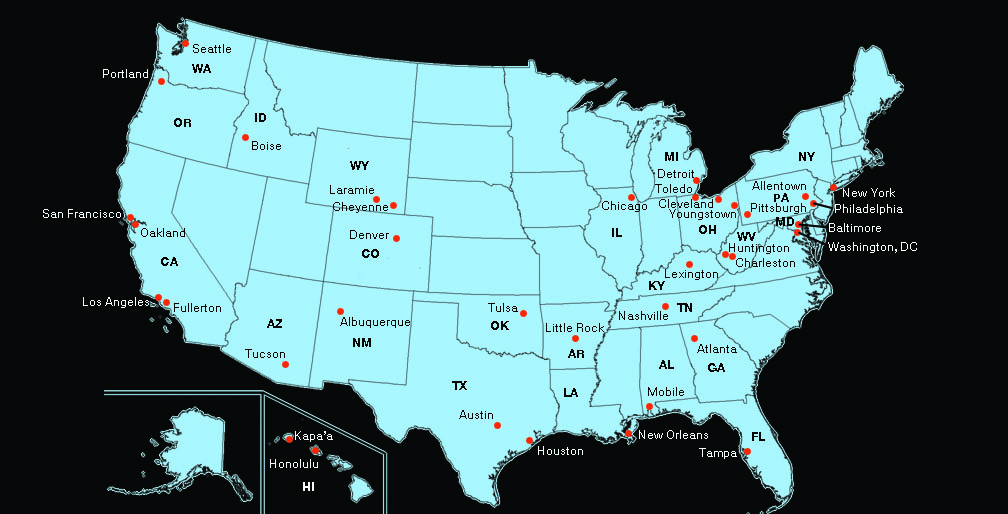
We’ve hit 14 occupations thus far. The latest ones being Charleston and Huntington, West Virginia, and Lexington, Kentucky. One common refrain is “the American Dream” is no longer possible, it’s dead or it’s a nightmare. The American Dream is shorthand for the middle class utopia. It’s the post-WWII ideal of well-paying working class jobs that can support a family, which have full benefits, and hope that the next generation will be better educated, have more opportunities and greater prosperity.

It’s a powerful mythology that ignores how socially deadening post-war society was. It was based on American Apartheid, virulent anti-Communism and suffocating notions of sexuality. Poverty was still widespread at home, Cold War militarism and the rise of advertising boosted the economy and plunder from the underdeveloped world allowed for increasing standards of living at home.

In the following article published before the occupy movement began I argue against the idea that “saving” the middle class should be the center of political or social struggles. Now, this is highly relevant to the Occupy movement because many people we have interviewed think we can just return to this post-war fantasy with a few policy tweaks and an election or two.

Just as the current crisis festered over many decades and is thus deeply rooted in our socio-economic system, creating a new world means radically restructuring our society and social relations, something that is not going to happen overnight or by electing some Democrats.

Leave a comment

Filed under Economy, Occupy Movement, Politics

Occupy Wall Street Movement Employs New Tactics to Confront Increased Police Violence (Between The Lines)

Interview with Arun Gupta, a founding editor of New York City’s Indypendent newspaper, conducted by Scott Harris for the nationally syndicated radio show “Between the Lines.”

Full-length Counterpoint interview (20:14):

RealAudio   MP3

Leave a comment

Filed under Occupy Movement

A Tale of Two Occupations (Salon)

The Homeless and the Occupy Movement

Michelle Fawcett interviews Occupy organizers and the homeless during her and Arun Gupta’s tour of Occupy protests around the U.S.

This was first posted at Salon.com.

Leave a comment

Filed under Occupy Movement

Occupational hazard: Living with the homeless (Salon)

Does the economic justice movement include the chronically poor? How can it not?

Two protesters who identify themselves as homeless, at Occupy Providence in downtown Providence, R.I. (Credit: Stew Milne/AP)

Topics:,

Tevin Bell is 18 but looks twice his age. Kicked out of his grandmother’s home last year after getting into a fight with his younger sister, Bell has been living on the streets of Detroit, “going from shelter to shelter.” On a brisk October afternoon he is relaxing in a folding chair, snug under a heavy jacket, watching flames lick the lip of a rusted barrel stuffed with burning scrap wood.

He is one of dozens of apparently homeless people clustered around Grand Circus Park, site of Occupy Detroit, which began on Oct. 14. Bell arrived two weeks later and has just spent his first night camping. He says, “I got a tent and a blanket. They said I can stay, ‘but you can’t just camp, you gotta help out.’”

Continue reading

4 Comments

Filed under Economy, Occupy Movement

Visualizing the Rust Belt occupation (Salon)

After reporting for Salon from the occupation sites in three Rust Belt cities suffering from serious post-industrial malaise. Michelle Fawcett and I sent this video, which documents the efforts of one such protest movement, in Youngstown, Ohio.

from  Visualizing the Rust Belt occupation – Occupy Wall Street – Salon.com.

5 Comments

Filed under Occupy Movement

Occupying the Rust Belt (Salon)

In three deindustrialized cities, protesters find friendly cops, determination and despair

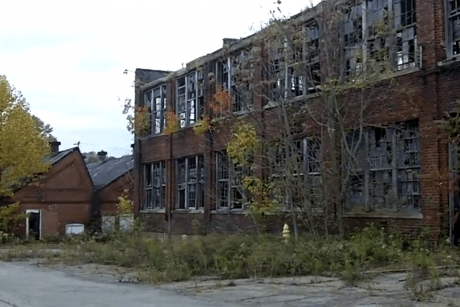
An abandoned building in Youngstown, Ohio

TOPICS: 

The surefire method to find occupations in small cities is to head for the center of town. After leaving Philadelphia on our Occupy America tour, we drive an hour north to Allentown. Pennsylvania’s third-largest city at 118,000 residents, Allentown has been weathered by years of deindustrialization in the steel, cement and textile industries that once made it an economic powerhouse.

Along MacArthur Boulevard, one of Allentown’s main drags, tidy but weary brick row homes line outlying neighborhoods. Close to Center Square, site of the requisite Civil War monument, the neighborhoods are heavily Latino and buildings exhibit signs of disrepair.

Continue reading

3 Comments

Filed under Occupy Movement

The Occupied Wall Street Journal: A Protest’s Ink-Stained Fingers (N.Y. Times)

Published on Monday, October 10, 2011 by The New York Times

by David Carr

At the Occupy Wall Street demonstration in Zuccotti Park, you’ll find all of the essentials of a state-of-the-art protest: drum circles, cheeky and plaintive handwritten signs, and, next to a thrumming generator, a hub of social media activity, including live streaming of the proceedings.The Occupied Wall Street Journal,”a four-page, full-color broadsheet newspaper, has gained surprising traction as a tool of protest at the Occupy Wall Street rallies in Manhattan.

But amid the accouterments of modern political action, you will also find, of all things, a broadsheet newspaper, The Occupied Wall Street Journal. It is not some tatty, hand-drawn piece of protest samizdat, but a professionally produced, four-color, four-page document of the demonstration, which began on Sept. 17.

“Get your newspaper, get your free Occupied Wall Street Journal!” shouted one barker. Getting something in the hands of your average New Yorker is a pretty tough sell, but The Occupied Wall Street Journal was eagerly received, even by the people who just came to gawk, in part because it answered the question of what all the hubbub was about.

Forgive an old newspaper hack a moment of sentimentality, but it is somehow reassuring that a newspaper still has traction in an environment preoccupied by social media. It makes sense when you think about it: newspapers convey a sense of place, of actually being there, that digital media can’t. When is the last time somebody handed you a Web site?

Continue reading

5 Comments

Filed under Occupy Movement